
Hidden Facts About Rajaji National Park Rishikesh You Didn't Know

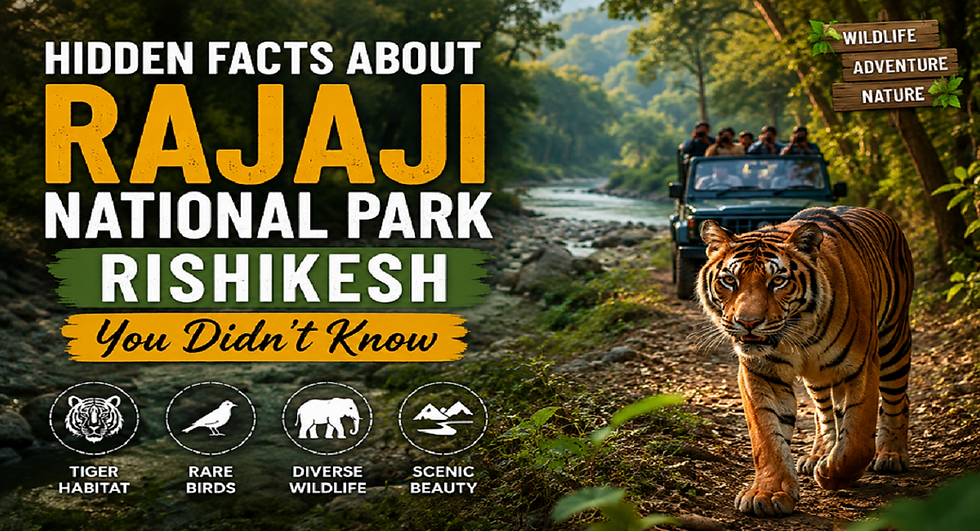
Most people associate Rishikesh with evening riverside prayers, yoga ashrams, and white-water rafting down the turbulent Ganga. They cross the iconic suspension bridges, listen to the temple bells, and head back home, completely unaware that right across the river lies a massive, sprawling wilderness of over 820 square kilometres.
Rajaji National Park, Rishikesh, is an ancient, untamed jungle that breathes right alongside the spiritual capital of India. It sits quietly at the transition zone where the rugged Shivalik hills flatten out into the fertile Ganga plains. While standard tourist brochures will tell you it has elephants and deer, they barely scratch the surface. This forest hides deep ecological mysteries, ancient migration routes, and complex wildlife behaviours that even seasoned travellers rarely hear about.
If you are planning a trip to Uttarakhand or looking into booking Rajaji National Park for a jungle safari, looking beyond the standard itinerary reveals a whole new side to this majestic landscape. Let us explore the untold secrets, distinct ecological zones, and practical advice needed to experience this sanctuary like a true naturalist.
Table of Contents
The Hidden Chronicles: 9 Facts You Didn't Know About Rajaji
Decoding the Safari Zones: Which One Fits Your Adventure?
The Rhythms of the Wild: Wildlife and Birdlife Ecosystems
Perfect Timing: Best Time to Visit and Seasonal Shifts
The Practical Blueprint: Tips for Booking Rajaji National Park
Frequently Asked Questions
Stepping Into the Untamed Wild
The Hidden Chronicles: 9 Facts You Didn't Know About Rajaji
1. A Canvas of Three Historic Sanctuaries
Rajaji was not always a single national park. Before 1983, this vast stretch of forest was divided into three distinct, separate wildlife sanctuaries: Rajaji, Motichur, and Chilla. The Indian government combined these three territories to create a unified, massive protected area. Amalgamating these zones allowed the forest department to establish an uninterrupted migration corridor for large mammals, saving the ecosystem from severe fragmentation.
2. The Identity Behind the Name
The park bears the name of C. Rajagopalachari, popularly known as "Rajaji." He was a prominent freedom fighter, the very last Governor-General of independent India, and one of the earliest recipients of the Bharat Ratna. During a visit to the pristine forests near Dehradun, he was deeply moved by the raw beauty of the region and the incredible diversity of its wildlife. Naming the reserve after him serves as a lasting tribute to his early vision of natural conservation.
3. The Unsung Mega-Corridor for Asian Elephants
While Jim Corbett National Park gets the spotlight for tigers, Rajaji is the true stronghold for the endangered Asian Elephant in northwestern India. The park forms the northwestern limit of the entire global distribution of the Asian elephant. What makes it fascinating is the ancient migration route. These gentle giants travel across the park using specific corridors, moving between the Yamuna and Ganga rivers, navigating steep riverbeds, and crossing dense forests based on centuries-old ancestral memory.
4. The Transformation Into a Tiger Reserve
For decades, Rajaji was primarily managed as an elephant sanctuary. However, its ecological importance skyrocketed in 2015 when it was officially declared the second Tiger Reserve of Uttarakhand. This status triggered massive anti-poaching initiatives, habitat restoration programs, and scientific monitoring. Over the last decade, tigers from neighbouring Corbett have successfully migrated here, breeding and establishing permanent territories in these rugged Shivalik hills.
5. The Ghostly Presence of Leopard Territories
If you walk or drive through the rocky, dried riverbeds of the Shivalik slopes, you are likely being watched. Rajaji boasts an incredibly high density of Indian leopards. Because tigers dominate the flat, open grasslands and low-lying valleys, leopards have masterfully adapted to the steep, rocky, and rugged terrain. They blend seamlessly into the dry, deciduous scrub, hunting under the cover of darkness and remaining completely invisible to the untrained eye.
6. The Nomadic Guardians of the Forest
Deep within the forest beats a human heart that has coexisted with the wild for generations. The Gujjars, a community of pastoral nomads, have lived inside these jungles for centuries, moving their water buffalo herds between the hills and plains according to the seasons. While many have relocated outside the core zones to support wildlife conservation efforts, their deep knowledge of animal tracks, waterholes, and jungle alarm calls remains an irreplaceable part of the local history.
7. The Geological Time Capsule of the Shivaliks
The hills stretching across Rajaji are not just scenic backdrops; they are part of the outer Himalayas, representing the youngest and most fragile mountain chain on earth. Made of loose boulders, sandstone, and clay deposits, these hills are a goldmine for palaeontologists. Fossils of prehistoric elephants, ancient giraffes, and long-extinct mammalian species have been discovered deep within these layers, proving that this very corridor has supported megafauna for millions of years.
8. A Crucial Pitstop on the Trans-Himalayan Flyway
Every winter, the skies above the Ganga River channels in Rajaji come alive with thousands of colourful wings. The park lies directly on the Trans-Himalayan migratory bird flyway. Birds escaping the harsh, freezing winters of Siberia, Central Asia, and Tibet fly over the high Himalayan peaks to rest in the park's wetlands and river basins. This seasonal influx transforms the sanctuary into an international crossroads for rare, migratory avifauna.
9. The Miracle of the Seasonal "Raus"
A defining geological feature of the park is the presence of wide, dry, boulder-strewn riverbeds locally known as "Raus." For most of the year, these look like dry stone highways cutting through the dense jungle. However, during the monsoon, they transform instantly into raging, turbulent torrents of water. These seasonal channels act as vital highways for wildlife, providing natural clearings where animals gather to graze on fresh grass, lick minerals from the rocks, and move silently between forest ranges.
Decoding the Safari Zones: Which One Fits Your Adventure?
Navigating the 820 square kilometres of Rajaji requires understanding its five distinct safari zones. Each zone features a unique terrain, its own distinct microclimate, and varying chances of wildlife sightings. Selecting the right zone is crucial for a memorable jungle experience.
Chilla Safari Zone
Chilla is the undisputed flagship zone of the park. Located on the eastern bank of the Ganga River, it features expansive, open grasslands, flat valleys, and an artificial water canal that runs right along the edge of the forest. Because of the open sightlines and high density of prey, Chilla offers the highest probability of spotting large mammals.
Herds of wild elephants are regularly seen drinking water near the canal or crossing the open grasslands. It is also the most reliable zone for tracking royal Bengal tigers, which frequent the waterholes during the warmer months. Because it is highly popular and easily accessible from Rishikesh, booking this zone well in advance is highly recommended.
Motichur Safari Zone
If you prefer deep, atmospheric woods over open grasslands, Motichur is the perfect choice. Characterised by dense, towering Sal forests, deep gorges, and rolling clay hills, this zone borders the Haridwar-Dehradun highway. The thick canopy creates a cooler, shadowy environment where the sunlight barely touches the forest floor.
Motichur is an exceptional habitat for large herds of spotted deer, wild boars, and barking deer. Elephants move through the dense cover regularly, crashing through the bamboo thickets. It offers a much quieter, less crowded safari experience compared to Chilla, making it perfect for travellers who want to absorb the raw sounds of the jungle.
Jhilmil Jheel Safari Zone
Jhilmil Jheel is an ecological gem completely distinct from the rest of the park. Situated near the Haridwar district border, this zone consists of a unique wetland ecosystem, filled with marshy tall grasslands, seasonal swamps, and water channels.
Jhilmil Jheel is famous as the only habitat in the entirety of Uttarakhand that hosts a surviving population of the highly endangered Swamp Deer (Barasingha). The marshy landscape is also a magnet for large herds of elephants looking to wallow in the mud. For photographers and birdwatchers, this slow-paced, wetland zone offers an intimate look at an incredibly rare habitat.
Ranipur Safari Zone
For those fascinated by the elusive ghost of the forest—the leopard—Ranipur is the place to be. This zone features an extremely rugged, rocky, and hilly terrain dominated by dry deciduous scrub, deep ravines, and steep sandstone cliffs.
Tigers rarely venture up these steep slopes, allowing the leopard population to thrive here. Leopards use the elevated rocky outcrops to scan the valleys below for prey. Ranipur also hosts sloth bears, langurs, and several species of deer. The 25-kilometre safari track rewards patient travellers who enjoy tracking animal footprints along the dusty, stony pathways.
Mohand Safari Zone
Located on the Dehradun side of the Shivalik range, Mohand is the quietest, least commercialised safari zone in Rajaji. It is defined by deep seasonal riverbeds, limestone caves, and mixed deciduous forests.
Because it receives far fewer safari jeeps than Chilla or Motichur, the wildlife here remains undisturbed. Mohand is excellent for tracking leopards and listening to the alarm calls of spotted deer echoing through the silent valleys. It is also highly favoured by serious birdwatchers who want to photograph rare forest birds without the background noise of multiple idling engines.
The Rhythms of the Wild: Wildlife and Birdlife Ecosystems
The sheer variety of life thriving within Rajaji National Park Rishikesh, is due to its dramatic mixture of habitats—ranging from wetlands and rivers to dense forests and rocky mountains.
The mammalian population is dominated by the Asian Elephant. Watching a massive tusker or a family herd with young calves walk through the tall grass is an unforgettable experience. The park's apex predators, the Bengal Tiger and the Indian Leopard, maintain a delicate balance, dividing the lowlands and highlands between them.
The forest floor is populated by thousands of herbivores. You will constantly encounter the beautiful Spotted Deer (Chital), the large and stately Sambar Deer, and the tiny, nervous Barking Deer (Kakar), whose hoarse, dog-like bark alerts the entire forest when a predator is nearby. Wild boars dig through the undergrowth, while troops of Hanuman Langurs and Rhesus Macaques keep watch from the treetops.
For bird lovers, the park is paradise. With over 400 recorded bird species, the forest canopy and riverbanks are filled with continuous birdsong. The park is famous for the Great Hornbill, a massive bird with a bright yellow and black beak that flies heavily over the forest canopy.
Along the riverbeds, you can spot the colourful Common Kingfisher, the Crested Kingfisher, and various predatory birds like the Changeable Hawk-Eagle and the Crested Serpent Eagle. During winter, the wetlands of Jhilmil and the Ganga channels host migratory waterfowl, including the Bar-headed Goose, Ruddy Shelduck, and northern pintails, making it a world-class birding destination.
Perfect Timing: Best Time to Visit and Seasonal Shifts
The park follows strict seasonal openings, operating annually from November 15 to June 15. During the remaining monsoon months, the seasonal rivers flood the tracks, making the forest completely inaccessible.
The winter months, from November to February, bring cool temperatures ranging from 5 to 25 degrees Celsius. The weather is crisp, the air is clean, and the forest is lush and green after the rains. This is the most comfortable time for a safari, offering clear blue skies and excellent conditions for birdwatching, as the migratory birds arrive in full force. However, you will need heavy woollens for the early morning safaris, as the open jeeps can get incredibly chilly.
As the calendar turns from March to June, the summer heat sets in, with temperatures climbing up to 40 degrees Celsius. While the afternoon sun can be intense, this is the prime window for tracking big game. The dense undergrowth dries up, significantly improving visibility through the trees. Driven by thirst, elephants, tigers, and leopards are forced out of the deep hills to visit the remaining permanent waterholes and riverbanks, making wildlife sightings much more frequent.
The Practical Blueprint: Tips for Booking Rajaji National Park
Organising a safari requires navigating official permits, vehicle hire, and strict forest department schedules. To keep your trip smooth and stress-free, keep these essential details in mind.
The Daily Safari Schedule
The forest department opens the gates for two sessions every day—morning and afternoon. The entry timings shift slightly through the season to match the rising and setting sun:
From mid-November to mid-February, the morning session opens at 6:30 AM, and the afternoon session begins at 1:30 PM.
From mid-February to mid-April, gates open at 6:00 AM for the morning run and 2:00 PM for the evening slot.
From mid-April to the closing date in June, morning entry starts at 5:30 AM, while the evening safari begins at 3:00 PM.
Each safari lasts for roughly two and a half to three hours, ensuring all vehicles exit the core forest before darkness falls.
Understanding the Cost Structure
When planning your budget for booking Rajaji National Park, keep in mind that the total cost is a combination of separate official fees. When planning your budget for booking Rajaji National Park, it's important to understand that the total safari cost is made up of several official charges. These typically include the safari permit, vehicle fee, guide fee, and any applicable government charges. The final amount may vary depending on the safari zone, vehicle type, and current Forest Department regulations. Checking the latest pricing before confirming your booking is always recommended.
Smart Booking Strategies
Always aim to book your safari well in advance, especially if you are targeting the Chilla zone on a weekend or during a national holiday. Securing your permits early guarantees your entry slot and protects you from last-minute disappointments.
Opting for a private Gypsy instead of a shared vehicle gives you the freedom to stop, observe, and photograph wildlife at your own pace without feeling rushed. Finally, always pack a physical copy of the government-issued photo identity card you used during the booking process, as the forest guards verify it at the entry gates before allowing your vehicle inside.
Frequently Asked Questions
Is a safari in Rajaji National Park safe for families?
Yes, the safaris are perfectly safe for families, seniors, and children. The open-top jeeps are driven by highly experienced, forest-authorised drivers who understand animal behaviour and maintain a safe, respectful distance from all wildlife. Children under the age of five are granted free entry into the park.
Can I explore the national park in my own personal car?
No, private personal vehicles are strictly prohibited inside the core zones of the national park to protect the fragile environment and ensure safety. You must travel in the official, open-top forest department gypsies, which are specially built to handle the rough, unpaved, and rocky jungle terrain.
Are tiger sightings guaranteed when booking a safari?
No reliable wild reserve can ever guarantee a big cat sighting. The animals roam free across vast, dense terrains. A successful sighting depends entirely on natural luck, weather conditions, the tracking skills of your guide, and paying close attention to jungle alarm calls.
What should I wear during a morning safari in December?
The winter mornings in the open Shivalik valleys are very cold. You should dress in warm layers, including a heavy jacket, a woollen cap, gloves, and a scarf. As the sun comes up later in the morning, you can comfortably peel off the layers.
Which safari zone is considered the best for birdwatching?
While all ranges offer incredible birding opportunities, Jhilmil Jheel and Mohand are considered the finest choices. Jhilmil’s unique wetlands attract rare waterfowl, while Mohand’s quiet, undisturbed canopy provides the perfect setting for spotting rare forest birds.
Can I take my professional DSLR camera inside the park?
Yes, visitors are allowed to bring cameras and binoculars into the reserve. The forest department allows standard photography equipment, though specialised commercial filmmaking gear requires separate official permits and additional fees.
How far is the primary Chilla gate from the centre of Rishikesh?
The Chilla range gate is located roughly 15 to 18 kilometres away from the main town centre of Rishikesh. Depending on local traffic conditions, the drive takes anywhere from 45 minutes to an hour, so plan your morning departure accordingly.
Is mobile phone network connectivity available inside the forest?
Mobile network coverage drops completely once your vehicle passes the entry gates and enters the deep valleys. This lack of signal is highly beneficial, allowing you to disconnect from the digital world and fully immerse yourself in the natural sounds of the wilderness.
Stepping Into the Untamed Wild
Rajaji National Park, Rishikesh, is far more than a simple excursion from a temple town; it is a living, breathing landscape filled with ancient secrets, fragile natural beauty, and incredible wildlife. From the hidden elephant corridors cutting through the Shivalik hills to the rare swamp deer grazing in the misty wetlands of Jhilmil, this reserve offers an authentic look at the raw, wild side of northern India.
Taking the time to step away from the crowded river banks and head into these quiet valleys gives you a profound appreciation for the delicate ecosystems that thrive right next to our cities. If you are ready to trade the hum of traffic for the morning alarm calls of the jungle, it is time to start planning your next journey. Secure your entry permits, reserve your private gypsy, and prepare to step across the river into a world where nature still writes all the rules.
Comments